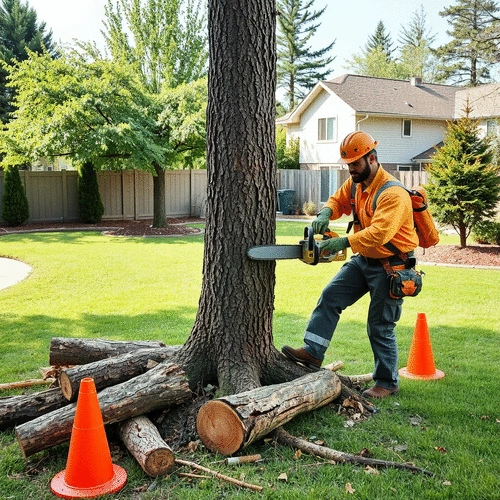
Considering the unpredictability of dead trees, understanding the risks involved in their removal is essential for both safety and property integrity. With the right knowledge and precautions, you can navigate this task confidently and effectively. Here are the key insights you’ll gain from this article:
What You Will Learn
- Recognize signs of hazardous trees, such as fungi, cracks, and excessive leaf loss, to ensure your landscape's safety.
- Assess structural risks by evaluating a tree's location, stability, and proximity to power lines or buildings.
- Prioritize safety during tree removal with essential equipment like hard hats, goggles, and proper chainsaw handling techniques.
- Understand the importance of conducting a thorough tree health and risk assessment before removal to inform your decisions.
- Explore various site restoration methods post-removal, including stump grinding and replanting, to enhance your outdoor space.
- Discover creative ways to repurpose dead wood, such as mulching and crafting, to add charm and utility to your property.
- Learn about proper disposal methods for tree waste, including recycling options and community resources, to promote sustainability.
Key Precautions for Safe Tree Removal
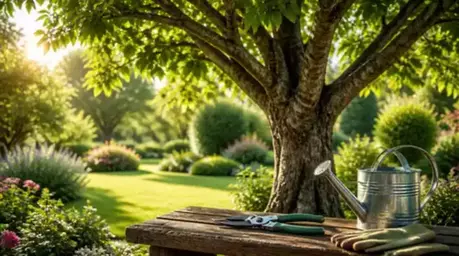
Taking the right precautions during tree removal can significantly enhance safety and efficiency. Below is a visual representation of essential safety equipment and considerations.
Essential Safety Equipment
- Hard hat for head protection
- Protective goggles to shield your eyes
- Sturdy gloves for hand protection
- Steel-toed boots for foot safety
Key Considerations for Tree Health Assessment
- Signs of decay or disease
- Proximity to structures and power lines
- Weather conditions affecting removal
Post-Removal Steps
- Site restoration for soil health
- Replanting suitable trees or shrubs
- Utilizing mulch from removed materials
Disposal and Recycling Options
- Contact local wood recycling services
- Consider donating usable wood
- Composting smaller branches and twigs
Understanding the Risks Involved in Dead Tree Removal
Removing a dead tree is more than just a simple task; it involves understanding several risks that can affect both your property and personal safety. As someone who has spent years helping homeowners enhance their outdoor spaces, I can tell you that the importance of recognizing these risks cannot be overstated. Trees can be unpredictable, especially when they are dead or dying, which is why a thorough assessment is essential before taking action. For more in-depth information, you might find our guide on professional tree care services explained helpful.
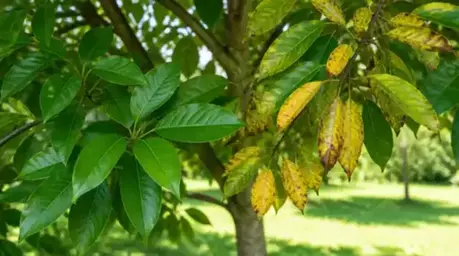
First, let’s dive into the signs that a tree may be hazardous. It’s not just about aesthetics; it’s about ensuring your landscape remains safe and healthy. If you notice any of the following indicators, it might be time to consider professional tree removal:
- Fungi or mushrooms growing at the base of the trunk
- Cracks or splits in the trunk
- Excessive leaf loss in spring and summer
- Dead branches that fall without wind
Identifying Hazardous Tree Indicators
Recognizing warning signs of dead trees is crucial for maintaining a safe environment. I always encourage homeowners to take a closer look during their routine yard surveys. For instance, if a tree has a hollow trunk or shows signs of pest infestation, these are major red flags! Regular inspections can save you from unexpected accidents.
Next, assessing structural hazards and risks can really make a difference. Factors such as alignment with power lines, proximity to your home, and the tree's overall stability should be considered. Here are some factors to keep in mind:
- Location of the tree in relation to structures
- Root damage or decay evident in the soil
- Presence of nearby trees that might influence stability
The Importance of Safety Precautions
When it comes to tree removal, prioritizing safety is non-negotiable! It's essential to equip yourself with the right tools and knowledge before diving into the task. Let’s talk about the essential safety equipment you’ll need:
- Hard hat for head protection
- Protective goggles to shield your eyes
- Sturdy gloves for hand protection
- Steel-toed boots for foot safety
Additionally, chainsaw safety cannot be overlooked. Proper handling and knowledge of best practices can prevent injuries. I recommend always keeping these key points in mind:
- Ensure the chainsaw is well-maintained and sharp
- Keep bystanders at a safe distance during operation
- Use the right techniques to cut at a safe angle
Tree Health Assessment and Risk Assessment
Before removing any dead tree, evaluating its health is vital. This process can provide insights into its stability and any risks involved in removal. Look for signs of decay or disease, which might indicate the tree's overall condition. A healthy tree might require different handling than a dead one. For more information on maintaining tree health, check out our article on identifying and treating tree diseases.
Conducting a risk assessment for hazardous trees can further inform your decision-making process. Ask yourself these questions:
- What is the tree's species, and does it have unique risks?
- How close is the tree to structures or power lines?
- What are the weather conditions that might affect the removal process?
By taking these steps, you can better prepare for the challenges of tree removal. Remember, at Timberline Garden, we believe in empowering you with the knowledge you need to make informed decisions that ensure the safety and beauty of your outdoor spaces!
Pro Tip
Before you start the tree removal process, consider consulting with a certified arborist. They can provide expert advice on the specific risks associated with your tree and recommend safe removal practices. This small step can save you time, effort, and potential hazards down the line!
Post-Removal Considerations for Your Property
Once you've successfully removed a dead tree, the journey doesn't end there! It's essential to consider the next steps for your property, ensuring it remains beautiful and functional. From site restoration to repurposing the wood, there are various options to explore that can enhance your outdoor space.
Site restoration is crucial after tree removal because it helps improve soil health and prepares the area for future landscaping. In the following sections, we'll dive into the specific tasks you can take on to achieve a thriving outdoor environment. Let's get started!
Site Restoration and Cleanup
After a tree comes down, you might wonder what to do with the leftover stump and debris. One option is to consider stump grinding, a technique that can help clear the area efficiently. By grinding the stump down to below ground level, you can reclaim valuable space for future planting or landscaping.
- Stump Grinding: A professional service can grind the stump, converting it into mulch that you can use in your garden.
- Manual Removal: If you're feeling adventurous, you can try to dig the stump out yourself, but this can be labor-intensive!
- Natural Decay: Leaving the stump to decay naturally can enrich the soil, but it may take a while.
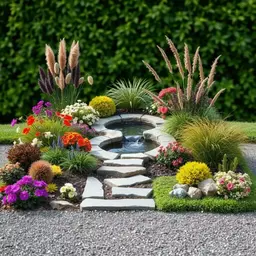
Once the stump is taken care of, think about how you want to use that space! Replanting is a fantastic way to refresh your landscape.
- Choose trees or shrubs that thrive in your local climate.
- Consider planting flowers or ornamental grasses for a colorful touch.
- Incorporate hardscaping elements like pathways or patios for a functional space.
Stump Grinding Options and Techniques
When it comes to stump grinding, the process can vary based on your preference and the size of the stump. It’s all about finding the right method for your situation! If you're unsure, consulting with a professional can make a huge difference. They’ll have the right tools and expertise to handle the job safely and efficiently.
Another consideration is the surrounding soil. After removing the tree, the area may need some TLC to ensure it drains well and promotes healthy growth. Adding organic matter, like compost, can significantly improve soil quality and support new plants.
Repurposing Dead Wood After Removal
Dead trees can be much more than just a nuisance; they can become valuable resources! There are plenty of creative ways to use the wood from your removed tree. Let’s explore some innovative ideas that can add charm to your garden or home.
- Mulch: Chopping the wood into smaller pieces can create mulch, which not only beautifies your flower beds but also conserves moisture!
- Firewood: If you have a fireplace or outdoor fire pit, cut the wood into logs for cozy evenings.
- Art Projects: Consider using larger pieces for garden art, benches, or planters. Get creative!
These uses not only help the environment by reducing waste but can also save you some cash on landscaping materials.
Creative Uses for Dead Trees: Mulch, Firewood, and Art
Don't overlook the potential for creativity! Using portions of the tree for art or landscaping can add a unique touch to your property. I've seen some incredible transformations where homeowners have made stunning sculptures from dead wood. Why not give it a try? It’s a fun way to connect with nature while enhancing your space! For more sustainable approaches to landscaping, consider sustainable tree care for homeowners.
Additionally, utilizing the wood from your tree can foster a deeper appreciation for your landscape. When you repurpose materials, you contribute to sustainability and promote a healthier ecosystem.
Tree Disposal and Wood Recycling
When it's time to dispose of the wood, ensure you follow proper methods. This is key not just for your property, but also for the community! Many areas have specific guidelines for tree disposal and recycling, so it pays to be informed.
- Contact Local Services: Check with your local waste management for wood recycling options.
- Donations: Some organizations accept wood donations for community projects or crafts.
- Composting: Smaller branches and twigs can be composted, enriching your garden soil!
Remember, every bit of effort counts when it comes to caring for our environment. Timberline Garden is here to help guide you through these decisions, ensuring you leave your property better than before!
Proper Methods for Tree Disposal
Disposing of a tree properly can not only clear your space but also ensure that you're following environmental regulations. Start by checking local ordinances regarding tree disposal, as these can vary by region. If you’re unsure where to begin, consider contacting professional services that specialize in waste management.
At Timberline Garden, I emphasize the importance of being responsible when it comes to tree removal and disposal. It’s about creating a sustainable approach to landscaping that benefits both you and the environment.
Benefits of Wood Recycling and Mulching
Recycling wood has numerous benefits, including conserving resources and reducing landfill waste. Mulching, for example, can improve soil health, retain moisture, and suppress weeds, giving your plants the best chance to thrive. By choosing to recycle materials, you're making a positive impact on your local ecosystem. To learn more about how mulch can benefit your trees, read our article on mulch benefits for tree growth.
Ultimately, it’s all about making conscious choices that reflect your values as a homeowner and caretaker of your property. Whether you’re a DIY enthusiast or prefer professional help, Timberline Garden is here to support you every step of the way!
Frequently Asked Questions About Dead Tree Removal
- Q: What are the primary signs that a tree might be hazardous and need removal?
- A: Key indicators include fungi or mushrooms growing at the base, cracks or splits in the trunk, excessive leaf loss outside of autumn, and dead branches falling without strong winds.
- Q: What essential safety equipment is needed for tree removal?
- A: Essential safety equipment includes a hard hat, protective goggles, sturdy gloves, and steel-toed boots to protect against potential injuries.
- Q: Why is a thorough tree health and risk assessment important before removal?
- A: An assessment helps determine the tree's stability, identifies potential risks to property or power lines, and informs the safest removal methods, potentially saving time and preventing accidents.
- Q: What are some options for site restoration after a tree has been removed?
- A: Options include stump grinding to clear space, replanting with suitable trees or shrubs, and improving soil health by adding organic matter like compost.
- Q: How can dead wood be repurposed after tree removal?
- A: Dead wood can be repurposed into mulch for garden beds, cut into firewood for heating, or used for creative art projects and landscaping elements like benches or planters.
- Q: What are proper disposal methods for tree waste?
- A: Proper disposal includes contacting local waste management for wood recycling options, donating usable wood to organizations, or composting smaller branches and twigs to enrich garden soil.
Recap of Key Points
Here is a quick recap of the important points discussed in the article:
- Signs of Hazardous Trees: Look for fungi, cracks, excessive leaf loss, and dead branches to identify trees that may need removal.
- Safety Precautions: Equip yourself with a hard hat, goggles, gloves, and steel-toed boots when removing trees.
- Risk Assessment: Evaluate tree health, proximity to structures, and unique risks based on species before removal.
- Site Restoration: After removal, consider stump grinding, planting new flora, and enhancing soil health for a thriving landscape.
- Repurposing Wood: Utilize removed wood for mulch, firewood, or creative garden art to enhance your outdoor space.
- Proper Disposal: Follow local guidelines for tree disposal and explore recycling options to minimize environmental impact.