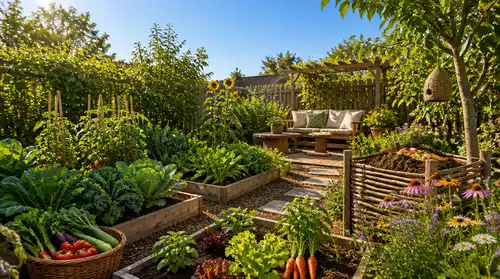
Have you ever considered how your outdoor space can transform into a sanctuary for both you and the environment? Creating a sustainable backyard is not just a personal achievement but a vital contribution to our planet's health and future. Let's explore the essential elements that can turn your yard into an eco-friendly oasis.
What You Will Learn
- The significance of biodiversity in sustainable backyards and its role in enhancing local ecosystems.
- Key practices for resource conservation, including water management and soil health improvement.
- How to select plants that support local wildlife and promote biodiversity.
- Eco-friendly materials and energy-efficient features that reduce your environmental footprint.
- Sustainable gardening practices such as organic gardening, permaculture, and xeriscaping that align with nature.
- The financial and community benefits of creating a sustainable backyard, including lower utility costs and fostering neighborly ties.
Benefits of a Sustainable Backyard
This overview highlights the key advantages of creating a sustainable backyard, focusing on environmental, financial, and community benefits.
Environmental Benefits
Supports local ecosystems and enhances biodiversity.
Financial Benefits
Lowers water and maintenance costs over time.
Community Benefits
Encourages neighbors to adopt sustainable practices, fostering a sense of community.
Transforming Your Outdoor Space into a Sustainable Backyard
Creating a sustainable backyard is not just a trend; it's a commitment to our planet and future generations. At Timberline Garden, we believe that transforming your outdoor space into a green oasis can significantly impact the environment. When you cultivate a sustainable backyard, you're contributing to biodiversity, conserving resources, and adapting to climate changes effectively. For more insights on this, consider building a sustainable landscape design.
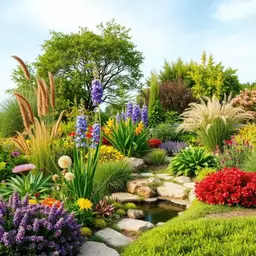
Have you ever thought about the little ecosystems in your yard? When you prioritize sustainability, you’re inviting more life into your space! This can lead to beautiful, thriving gardens that not only enhance your home but also support local wildlife, such as birds and beneficial insects.
Understanding the Importance of a Sustainable Backyard
Why should we care about having a sustainable backyard? It’s simple! Sustainable backyards help improve air and water quality and promote biodiversity. By creating a habitat for various species, you’re making a positive contribution to your local ecosystem.
- Biodiversity: A diverse range of plants and animals can thrive in a sustainable environment.
- Resource Conservation: Sustainable practices help conserve water and reduce energy usage.
- Climate Adaptability: Well-designed landscapes can better withstand climate extremes.
Every small step you take, such as planting a native flower or installing a rain barrel, adds up! It’s about fostering a connection with nature while enjoying the beauty around you. Discover more about pollinator gardens for local biodiversity.
Key Elements for Creating an Eco-Friendly Backyard
To build a truly eco-friendly backyard, there are some key elements to consider. These include water management, soil health, plant selection, material choices, and energy efficiency. Each element plays a vital role in how your outdoor space functions and interacts with the environment.
- Water Management: Efficient watering systems can help conserve this precious resource.
- Soil Health: Healthy soil is the foundation for thriving plants.
- Plant Selection: Choosing the right plants can promote local biodiversity.
- Materials: Eco-friendly materials reduce environmental impact.
- Energy Efficiency: Incorporating energy-saving features lowers your overall footprint.
At Timberline Garden, we encourage you to explore these elements one by one. Embracing them will not only make your backyard more sustainable but also more enjoyable for you and your family!
Sustainable Gardening Practices for Your Backyard
Sustainable gardening is about working with nature rather than against it. Concepts like organic gardening, permaculture, and xeriscaping can help you achieve a vibrant and eco-friendly garden. These practices allow you to nurture your plants while minimizing harm to the environment.
- Organic Gardening: This method avoids chemicals, focusing on natural fertilizers and pest control.
- Permaculture: Design your garden to mimic natural ecosystems, improving productivity and resilience.
- Xeriscaping: This practice involves designing landscapes that require minimal irrigation, perfect for dry climates.
As you embark on your gardening journey, remember that each sustainable practice you adopt not only enhances your landscape but also protects our precious resources. It’s a win-win situation! You can also learn more about native plants for sustainable landscapes.
Pro Tip
Did you know? Incorporating native plants into your garden not only enhances its beauty but also plays a crucial role in supporting local wildlife. Native plants are adapted to the local climate and soil conditions, requiring less water and maintenance while providing food and habitat for birds, bees, and butterflies. This simple change can significantly boost the biodiversity of your backyard!
Frequently Asked Questions About Sustainable Backyards
- What is a sustainable backyard?
- A sustainable backyard is an outdoor space designed and maintained using practices that minimize environmental impact, conserve resources, and support local ecosystems. It often involves native plants, efficient water use, and organic gardening methods.
- What are the main benefits of creating a sustainable backyard?
- The main benefits include enhancing biodiversity, conserving water and energy, improving soil health, reducing maintenance costs, and creating a healthier environment for both humans and wildlife. It also fosters community engagement and resilience to climate change.
- What are some key elements for an eco-friendly backyard?
- Key elements include efficient water management (e.g., rain barrels, drip irrigation), improving soil health (e.g., composting, organic fertilizers), selecting native and drought-tolerant plants, using eco-friendly materials, and incorporating energy-efficient features.
- What sustainable gardening practices can I adopt?
- You can adopt organic gardening (avoiding chemicals), permaculture (designing self-sustaining ecosystems), and xeriscaping (landscaping that requires minimal irrigation). These practices help you work with nature for a vibrant and healthy garden.
- How can I start transforming my backyard into a sustainable one?
- Begin by assessing your outdoor space, identifying areas for improvement, and making small changes like composting, installing rain barrels, choosing native plants, and using eco-friendly materials. Exploring local sustainability programs can also provide valuable resources and support.
Summarizing Strategies for a More Sustainable Backyard
Creating a sustainable backyard is more than just a trend; it's a vital step towards nurturing our planet. By embracing eco-friendly practices, we're not only enhancing our outdoor spaces but also contributing to a healthier environment. Have you ever thought about how your backyard can impact biodiversity, save you money, and strengthen community ties? Let’s recap the benefits of this rewarding journey!
One of the biggest advantages of building an *eco-friendly backyard* is the positive impact on the environment. Sustainable backyards help promote biodiversity by providing habitats for various wildlife species. Furthermore, they aid in resource conservation, utilizing *water-saving techniques* and reducing energy consumption. Not to mention, a well-planned garden can save you money in the long run by lowering utility costs and reducing the need for chemical fertilizers!
- Environmental Benefits: Supports local ecosystems and enhances biodiversity.
- Financial Benefits: Lowers water and maintenance costs over time.
- Community Benefits: Encourages neighbors to adopt sustainable practices, fostering a sense of community.
Encouraging Action Towards a Greener Future
Now that you understand the numerous benefits, it’s time to take action! At Timberline Garden, we believe everyone can contribute to a greener future, starting right in your own backyard. Whether you’re just beginning or looking to enhance your current garden, consider this your personal invitation to embark on a sustainable gardening adventure!
Take the first step by assessing your outdoor space and identifying areas for improvement. Remember, small changes can make a significant impact! Here’s a quick checklist of actions you can take:
- Start composting kitchen scraps to enrich your soil.
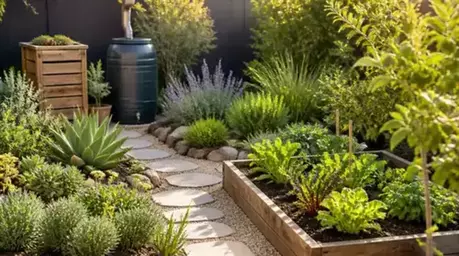
- Install a rain barrel to collect water for irrigation.
- Choose native plants that require less water and attract pollinators.
- Use eco-friendly materials for any new structures or pathways.
Don't forget to explore local sustainability programs and resources. Many communities offer workshops or grants to support projects like yours. By taking these steps, you’ll not only beautify your space but also make a meaningful contribution towards a healthier planet. So, what are you waiting for? Let’s make our backyards a sustainable oasis together! For more detailed guidance, consider learning about sustainable landscape maintenance strategies.
Recap of Key Points
Here is a quick recap of the important points discussed in the article:
- Promote Biodiversity: Create habitats for wildlife, enhancing local ecosystems.
- Conserve Resources: Implement water-saving techniques and reduce energy consumption.
- Enhance Soil Health: Focus on organic gardening and composting to enrich your soil naturally.
- Choose Native Plants: Select plants that require less water and support local pollinators.
- Utilize Eco-Friendly Materials: Opt for sustainable materials when building structures or pathways.
- Community Engagement: Encourage neighbors to adopt sustainable practices to foster a sense of community.